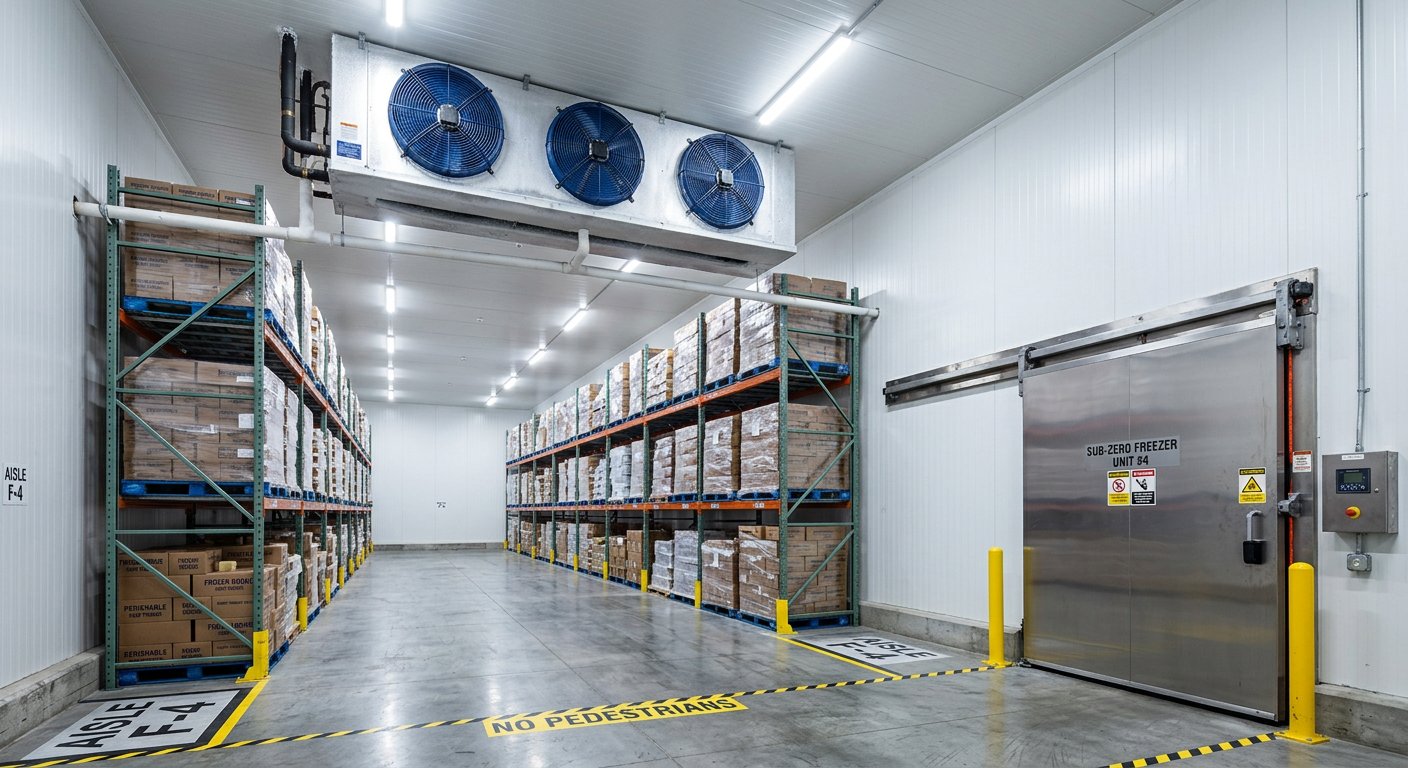
Why Heavy Ice Means Trouble for Your Walk-in Freezer
Facility managers occasionally assume thick frost on a freezer coil means the unit is cooling strongly. In reality, solid ice acts as thermal insulation and physically blocks airflow between the aluminium evaporator fins. Within hours, freezer air temperature climbs from -18°C toward 0°C while liquid refrigerant risks flooding back to damage the compressor.
Critical Safety Rule: Never allow staff to chip ice off an evaporator coil with knives, screwdrivers or metal bars. Puncturing a thin copper refrigerant return bend turns a simple defrost repair into an expensive coil replacement and full gas loss.
Where Ice Forms Tells You What Failed
Ice Encasing the Entire Evaporator Coil Fin Pack
This almost always points to a defrost system fault:
- Burnt-out electric defrost heater rod(s)
- Failed defrost termination sensor ending the defrost cycle prematurely
- Stuck defrost timer or burnt defrost contactor relay
- Insufficient defrost frequency for humid coastal RAK locations like Al Hamra, Mina Al Arab or Al Rams
Ice Overflowing From the Drain Pan & Icicles Below the Unit
If the coil clears partially during defrost but water freezes in the pan or drips onto boxes, either the drain-pan heater or drain-line heater cable has failed, or slime/debris is blocking the condensate pipe.
Frost & Snow Around the Door Frame and Ceiling Near the Entrance
Feather-like snow on the ceiling just inside the doorway indicates warm humid air infiltration—usually from a torn door gasket, sagging cam-lift hinges, missing PVC strip curtains, or a door left propped open during deliveries.
Getting Permanently Ice-Free Operation
Resolving chronic icing requires fixing both the ice removal mechanism (Defrost System Repair) and the moisture entry point (Door & Seal Repair). Need help with an iced-up freezer in Ras Al Khaimah? Book Walk-in Freezer Repair today.